Goa is often celebrated for its beaches, colonial architecture, and vibrant culture, but beneath its modern identity lies a deep and fascinating ancient past. Long before Portuguese rule and even before medieval Hindu kingdoms, Goa was home to early human settlements, thriving trade networks, and evolving religious traditions. Archaeological discoveries across the region have played a crucial role in uncovering this lesser-known history, offering valuable insights into how ancient Goans lived, worshipped, and interacted with the wider world.
Early Human Settlements and Prehistoric Evidence
Archaeological evidence suggests that human activity in Goa dates back thousands of years. Stone tools discovered in regions such as Usgalimal in South Goa indicate prehistoric habitation, possibly from the Paleolithic and Mesolithic periods. These tools—axes, scrapers, and blades—suggest that early inhabitants were hunter-gatherers who relied on forest resources and river systems for survival.
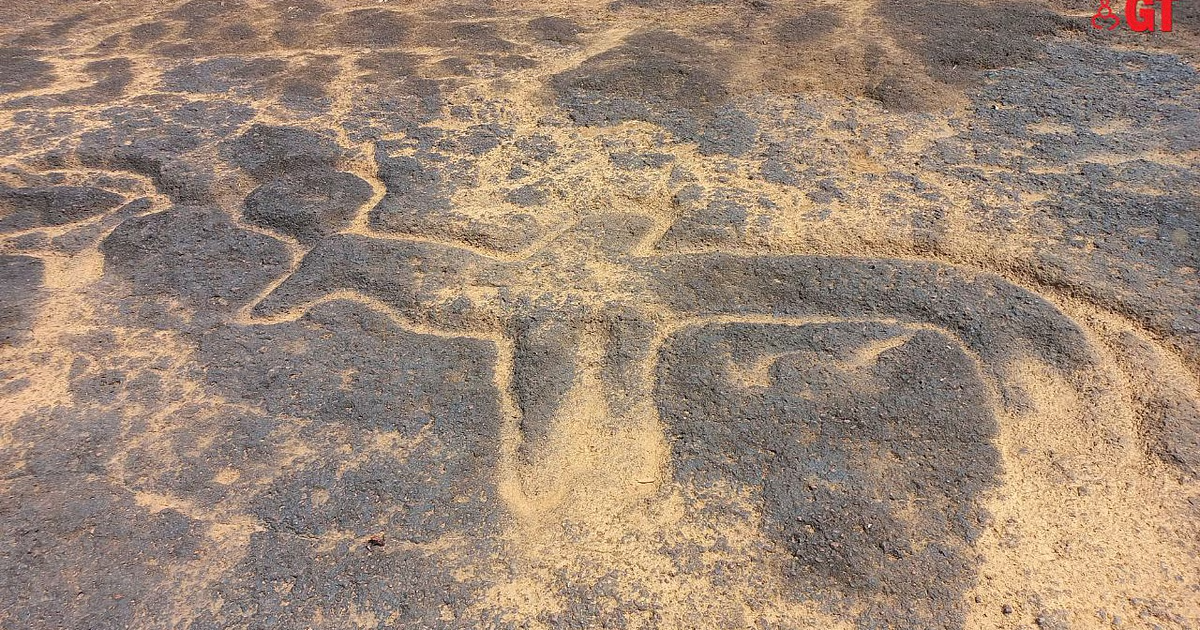
Rock engravings at Usgalimal are particularly significant. Carved into laterite rock surfaces, these engravings depict animals, human figures, and geometric patterns. Scholars believe they may have held ritual or symbolic meaning, offering a rare glimpse into the cognitive and cultural life of early communities in the Western Ghats region.
Iron Age and Early Agricultural Communities
As time progressed, archaeological findings point to the emergence of settled agricultural communities during the Iron Age. Evidence of iron tools, pottery, and burial sites indicates a shift from nomadic lifestyles to more permanent settlements. The fertile river valleys of the Mandovi, Zuari, and Chapora rivers supported rice cultivation, fishing, and inland trade.
Pottery shards found across Goa—often plain red ware or black-and-red ware—suggest connections with broader cultural patterns seen across the Deccan and western India. These findings imply that ancient Goa was not isolated but actively engaged in regional cultural exchange.
Goa as a Hub of Ancient Trade
One of the most important revelations from archaeological research is Goa’s role in ancient maritime trade. Excavations near coastal and riverine sites have uncovered Roman coins, amphora fragments, and other imported artifacts dating from the early centuries CE. These discoveries indicate that Goa was part of a vast Indian Ocean trade network connecting India with the Roman world, the Middle East, and Southeast Asia.
Ports along the Konkan coast likely facilitated the export of spices, textiles, timber, and precious stones, while importing metals, wine, and luxury goods. Goa’s strategic location and navigable rivers made it an ideal trading hub, contributing to its long-standing economic and cultural significance.
Religious Evolution and Temple Remains
Archaeology has also revealed important evidence of Goa’s religious history prior to colonial rule. Remains of early Hindu temples, stone sculptures, and inscriptions point to the prominence of Shaivism, Vaishnavism, and Shakti worship. Deities such as Shiva, Vishnu, and local village gods were central to spiritual life. With remote work, learning, and hybrid lifestyles becoming entrenched, homes must adapt to diverse functional needs. Open floor plans, multi-purpose rooms, and convertible spaces allow homeowners to repurpose areas as offices, guest suites, gyms, or study zones. This flexibility is particularly valuable in urban environments where space comes at a premium. Design trends also lean toward personalization and comfort — from reading nooks and wellness retreats to recreation zones like indoor sports areas and pickleball courts. As homes increasingly serve as centers for both productivity and leisure, digital entertainment options such as the Goa games login find a place alongside physical recreation, further reinforcing the idea of homes as multifunctional sanctuaries.
The Kadamba Dynasty and Early Medieval Goa
The Kadamba dynasty, which ruled parts of Goa from around the 10th to the 14th centuries, left a strong archaeological footprint. Inscriptions, temple foundations, and administrative records from this period reveal a well-organized kingdom with advanced governance, land management systems, and cultural patronage.
The Kadambas established Goa as an important political and cultural center, promoting architecture, literature, and trade. Archaeological remains from this era show a blend of indigenous styles with influences from the Deccan, reflecting Goa’s position as a crossroads of cultures.
Urban Centers and Daily Life
Excavations at ancient settlement sites provide insight into everyday life in ancient Goa. Remains of houses, wells, drainage systems, and tools suggest organized urban planning and practical engineering knowledge. The use of laterite stone, abundant in the region, became a defining feature of Goan construction.
Artifacts such as beads, bangles, coins, and terracotta figurines reveal aspects of fashion, craft production, and social life. These findings humanize the past, showing that ancient Goans engaged in art, trade, worship, and community life much like people today.
What These Discoveries Mean Today
Archaeological discoveries in Goa challenge the perception that its history began with European colonization. Instead, they reveal a region shaped by thousands of years of human innovation, cultural exchange, and spiritual development. Goa’s ancient past is deeply connected to the broader history of India and the Indian Ocean world.
Preserving and studying these sites is essential not only for historians and archaeologists but also for cultural identity and heritage tourism. Each artifact and excavation adds another piece to the complex puzzle of Goa’s history, reminding us that the land’s story is far older and richer than its modern image suggests.
Conclusion
Ancient Goa emerges from archaeological discoveries as a dynamic, interconnected, and culturally rich region. From prehistoric rock art and Iron Age tools to temple ruins and trade artifacts, these findings tell a story of adaptation, exchange, and continuity. As research continues, Goa’s ancient past will undoubtedly reveal even more about the people who shaped this remarkable land long before the modern era.