Most people never think about a police clearance certificate until someone asks for one. It might be a visa officer, a new employer or a licensing body, and suddenly you’re hunting for paperwork you’ve never needed before. Knowing when these requests come up, and what the document actually shows, saves a lot of stress and wasted time.
In South Africa, the sa police clearance certificate is issued by the South African Police Service (SAPS). It confirms whether a person has a criminal record on the national database. Here are the situations where it is most often required.
What a Police Clearance Certificate Actually Is
A police clearance certificate is an official document that states whether you have any criminal convictions or pending cases on record. It is based on your fingerprints, which are checked against the Criminal Record Centre’s database. The result is either “no criminal record” or a list of any recorded offences.
Because it is fingerprint-based, it is considered far more reliable than a simple declaration or a character reference. That is why so many institutions ask for it.
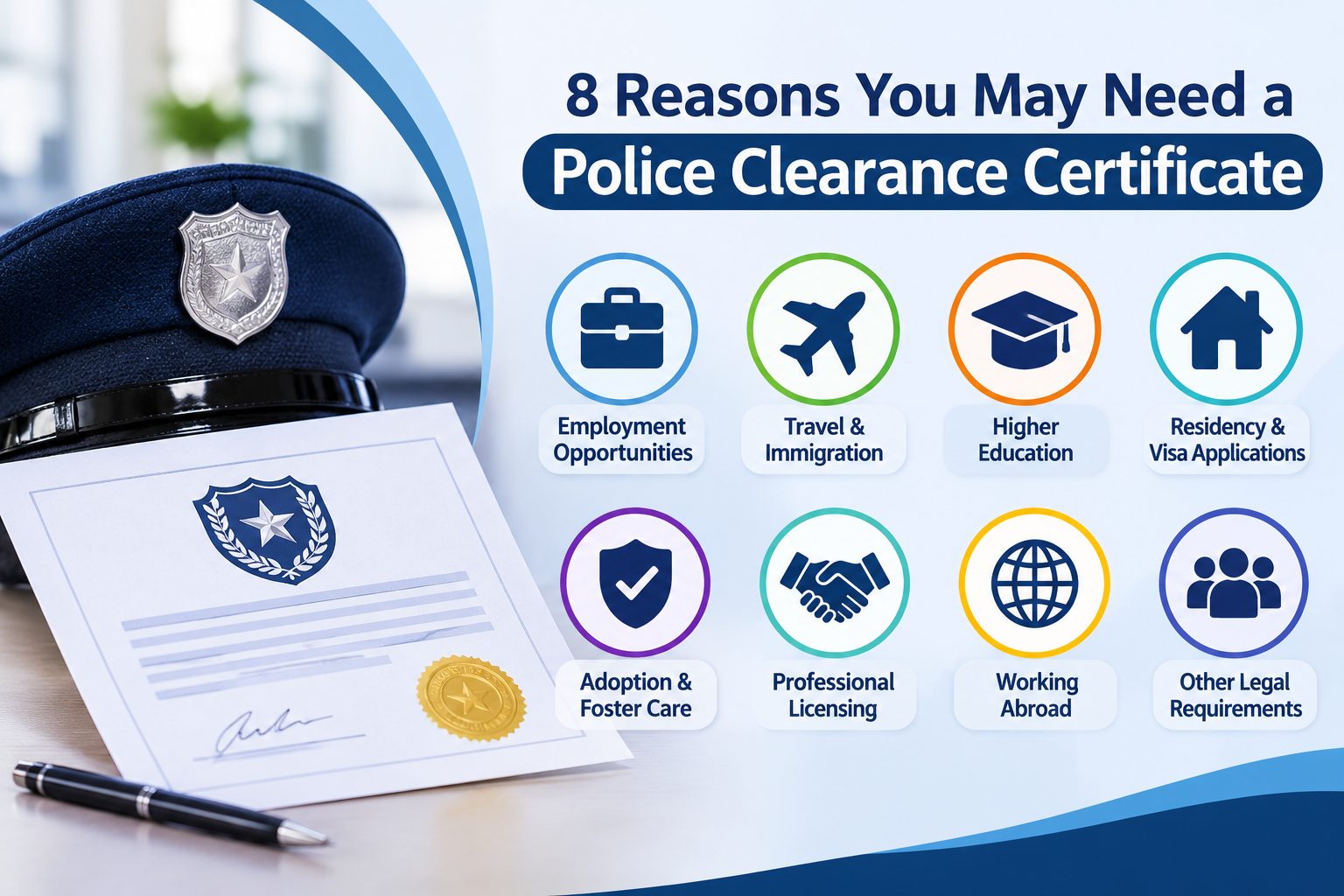
8 Common Reasons You May Need One
1. Immigration and Visa Applications
This is probably the most common reason. Countries such as Canada, Australia, New Zealand and the UK often ask for a police clearance as part of a work, study or permanent residence application. Immigration officials use it to confirm that an applicant meets the character requirements.
2. Long-Term Work Abroad
Even if you are not emigrating, a foreign employer or work permit authority may want proof of a clean record, particularly for roles in finance, education, healthcare or government-linked industries.
3. Employment Within South Africa
Many local employers now run background checks before confirming a hire. Jobs that involve handling money, confidential information or vulnerable people often require a clearance certificate as part of the vetting process.
4. Working With Children or Vulnerable Groups
Teachers, childcare workers, caregivers, coaches and volunteers frequently need to prove they have no relevant convictions. These checks exist to protect people who cannot easily protect themselves, and organisations in this space tend to take them seriously.
5. Professional Registration and Licensing
Some professions require a clearance before you can register or renew a licence. Examples include private security work, certain financial services roles, and various regulated trades. Licensing bodies use it to confirm that applicants are fit to practise.
6. Firearm Licence Applications
If you apply for a firearm licence, the authorities will carry out their own background checks. Having your documents in order, including proof that you have no disqualifying record, helps the process run more smoothly.
7. Adoption and Foster Care
Anyone applying to adopt or foster a child will be assessed carefully. A police clearance is a standard part of that assessment and usually applies to other adults in the household as well.
8. Visa Applications for Travel and Long Stays
Some countries ask for a clearance even for extended visits, retirement visas or long-stay tourist permits. Requirements differ from one embassy to another, so it is wise to check the specific rules of the country you are applying to.
What Do You Need for a Police Clearance Certificate?
If you’re wondering what do you need for a police clearance certificate, the list is fairly short. Applicants generally need:
- A certified copy of their ID document or passport
- A completed application form
- Fingerprints taken at a police station or an accredited service provider
- The applicable fee, which can change over time
Foreign nationals living in South Africa will usually need a copy of their passport and may need to provide additional documents. It’s best to confirm the current requirements with SAPS before you start, as procedures are updated from time to time.
How Long Does It Take?
Processing times depend on the volume of applications and on whether your fingerprints are clear enough to be read. SAPS has traditionally quoted around 15 working days, but delays do happen. If your certificate is needed for a visa or job deadline, applying early is a sensible precaution.
Another point worth knowing is that some institutions only accept certificates issued within the last three to six months. Applying too early can be as problematic as applying too late.
Common Mistakes to Avoid
A few simple errors cause most of the delays:
- Submitting poor-quality fingerprints that need to be retaken
- Providing unclear or uncertified copies of identity documents
- Making spelling or detail errors on the application form
- Forgetting that a foreign authority may also require legalisation or an apostille
Checking each of these before you submit can save you weeks.
Final Thoughts
A police clearance certificate is a small document with a big role in many life events, from moving abroad to starting a new job. The process is straightforward when you know what is expected, but one rejected fingerprint or missing document can set you back by weeks. If your application is time-sensitive, or if you need the certificate legalised for use overseas, it is worth getting help from an experienced, accredited provider who handles these applications regularly. Getting the sa police clearance certificate right the first time is far easier than correcting it later.
FAQs
1. Does a police clearance certificate expire?
The certificate itself does not carry an expiry date, but most institutions only accept one issued within the last three to six months. Always check the requirement of the organisation asking for it.
2. Can someone else apply on my behalf?
Fingerprints must be taken in person, so you will need to be present at some point. Some accredited agents can assist with the paperwork and submission.
3. What happens if my fingerprints are rejected?
You will usually be asked to provide a new set. This can add extra time to the process, which is why clear, properly taken prints are important.
4. Is a police clearance certificate the same as a background check?
Not exactly. A police clearance focuses on criminal records, while a background check by an employer may also cover credit history, qualifications and references.
5. Do I need an apostille for use overseas?
Often, yes. Many foreign authorities require the certificate to be authenticated or apostilled. Confirm this with the receiving country’s embassy or immigration authority.