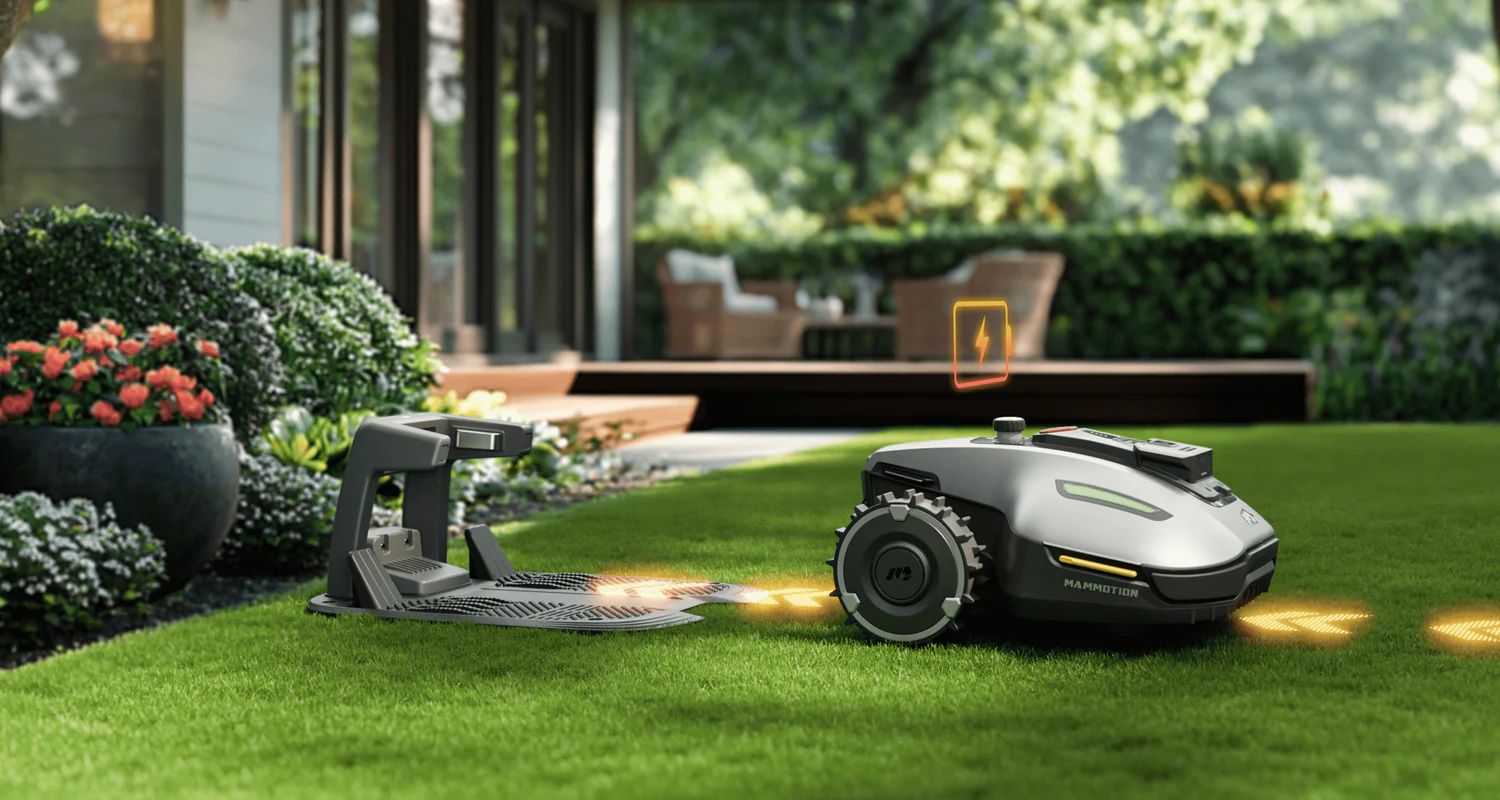
Robot lawn mowers have become an increasingly popular solution for homeowners who want a well-maintained lawn without spending hours pushing a mower. However, if your property includes dense trees or sits near tall buildings, choosing the right robotic mower can be challenging. Many traditional systems struggle with signal loss, complicated installation, or unreliable navigation in wooded environments.
Fortunately, a new generation of robotic lawn mowers is solving these problems. With innovations like AI yard mapping and MOVA’s advanced 3D LiDAR technology, modern RTK-free robot mowers can operate smoothly even in tree-covered yards where satellite signals are weak or unstable.
If you’re searching for the best robot mower for wooded yards, understanding how these new technologies work can help you find a more reliable and user-friendly solution.
The Evolution of Robotic Lawn Mowing Technology
Over the past decade, robotic lawn mowers have evolved rapidly. From boundary wires to AI-powered navigation, each stage of development has focused on making lawn care more efficient and convenient.
Boundary Wire Systems: The First Generation
Early robot mowers relied on buried boundary wires to define the mowing area. Homeowners had to install cables along the perimeter of their lawns and around obstacles to guide the mower.
Although effective, this approach had several disadvantages:
- Installation could take hours or even days
- Wires could be damaged by gardening tools or weather
- Adjusting the lawn layout required reinstalling cables
For large properties or wooded yards, installing boundary wires could be particularly inconvenient.
GPS-RTK Navigation: A Step Forward
The next generation introduced GPS-RTK navigation, which allowed robotic mowers to map lawns using satellite signals and dedicated base stations. This technology improved mowing precision and enabled smarter navigation patterns.
However, RTK systems rely heavily on stable satellite signals. When signals are blocked by tall trees, fences, or buildings, navigation accuracy can quickly decline.
Vision and LiDAR Fusion: The Next Generation
Today, the newest robotic lawn mowers are moving beyond satellite-based navigation. Some advanced models now use Vision and LiDAR fusion technologies to map and understand their environment.
For example, MOVA has developed an advanced 3D LiDAR navigation system that allows robotic mowers to detect surroundings and build accurate maps without relying on RTK signals. By combining LiDAR scanning with AI vision, these systems can navigate complex yards with much greater stability.
This technology is particularly beneficial for wooded properties where satellite signals are unreliable.
The RTK Struggle Many US Homeowners Experience
Although RTK systems improved robotic mowing technology, many homeowners still encounter practical challenges.
Signal Loss Under Dense Trees
Tree canopies can significantly block GPS signals. When satellite communication becomes unstable, RTK mowers may:
- lose positioning accuracy
- stop mowing temporarily
- repeat mowing paths or miss sections of the lawn
For yards with large trees or dense landscaping, this can make mowing inconsistent.
HOA Restrictions on Base Stations
RTK systems typically require a base station antenna installed outdoors in a location with clear sky visibility. However, some HOA communities restrict visible outdoor equipment, making installation difficult.
In certain neighborhoods, homeowners may not be allowed to mount base stations on rooftops or in front yards.
Complicated Installation and Calibration
Another challenge is the setup process. RTK systems often require careful calibration, including:
- precise base station placement
- signal strength adjustments
- manual troubleshooting if signal interruptions occur
For many homeowners, this makes RTK-based mowers feel overly technical and difficult to install.
The “Coffee Break” Setup with AI Yard Mapping
One of the biggest improvements in modern robotic mowing technology is the introduction of AI auto-mapping systems.
What Is AI Auto-Mapping?
AI auto-mapping allows a robot mower to scan and understand the yard environment automatically. Instead of relying on buried wires or satellite signals, the mower uses sensors to detect boundaries, obstacles, and lawn shapes.
Using this information, the mower creates a digital map of the yard and plans efficient mowing paths.
Mapping a Lawn in Minutes
With AI mapping technology, homeowners can complete setup very quickly. In many cases, the mower simply needs to be guided once around the yard using a mobile app. During this process, the sensors scan the environment and build a detailed map.
The entire process can often be completed in just a few minutes, making it easy enough to finish during a short break.
A Truly Wire-Free Lawn Mower Setup
Because AI mapping relies on onboard sensors rather than external infrastructure, the setup process becomes much simpler. Homeowners no longer need:
- buried boundary wires
- RTK antennas or base stations
- complicated satellite calibration
This results in a clean and convenient wire-free lawn mower setup.
Reliable Navigation in Wooded Yards with MOVA 3D LiDAR
The biggest advantage of sensor-based navigation is its ability to maintain accuracy in environments where GPS signals fail.
Why Traditional Mowers Lose Signal
GPS-based mowers depend on continuous satellite communication to determine their position. In wooded yards, tall trees can block or reflect these signals, causing positioning errors.
When signals drop, the mower may struggle to maintain consistent coverage or navigation.
How MOVA’s 3D LiDAR Technology Solves the Problem
To address this issue, MOVA integrates its proprietary UltraView™ 3.0 3D LiDAR system into the LiDAX Ultra series. This technology uses laser scanning to continuously analyze the surrounding environment.
Instead of relying on satellite positioning, the mower builds a real-time 3D map of the yard. This allows it to navigate accurately even in challenging environments such as:
- dense tree canopies
- shaded gardens
- narrow spaces near fences or walls
Because the system operates independently of GPS signals, the mower maintains reliable performance even in complex landscapes.
Stable Operation in Complex Landscapes
In addition to improving navigation, LiDAR mapping helps robotic mowers adapt to difficult terrain. Uneven ground, slopes, and irregular yard layouts can all be handled more effectively when the mower understands its surroundings in three dimensions.
This makes LiDAR-based navigation particularly valuable for large, wooded, or irregularly shaped lawns.
Recommended Robot Mower for Wooded Yards
One of the most advanced solutions currently available is the MOVA LiDAX Ultra 3000 AWD Lawn Mower.
This mower combines MOVA’s 3D LiDAR navigation technology with AI vision and powerful all-wheel drive, making it well suited for challenging yard environments.
Key Features
The MOVA LiDAX Ultra 3000 AWD includes several advanced technologies:
- UltraView™ 3.0 3D LiDAR with AI dual vision
- RTK-free navigation system
- AI auto-mapping mower technology
- UltraDrive™ all-wheel drive for slopes and uneven terrain
- 36V dual cutting discs for strong mowing performance
- Smart edge trimming for clean borders
- Customizable mowing patterns
- Dual-map management for multiple lawn areas
- Pet-friendly obstacle detection
Why It Works Well for Wooded Yards
Because it uses MOVA’s LiDAR-based navigation instead of RTK signals, the mower can operate reliably even when satellite signals are blocked by trees or buildings.
Homeowners benefit from:
- stable navigation under dense tree cover
- quick and easy installation
- strong traction on slopes and uneven ground
These capabilities make it one of the best robot mower options for wooded yards.
Conclusion
Wooded yards can be challenging for traditional RTK robot mowers due to tree cover, uneven terrain, and unstable signals.
RTK-free robot mowers offer a smarter solution. With AI yard mapping and MOVA’s advanced 3D LiDAR navigation, they can mow accurately without satellite signals or boundary wires.
For homeowners seeking a reliable wire-free lawn mower setup, the MOVA LiDAX Ultra 3000 AWD provides powerful performance, intelligent navigation, and quick installation—making robotic lawn care easier than ever.