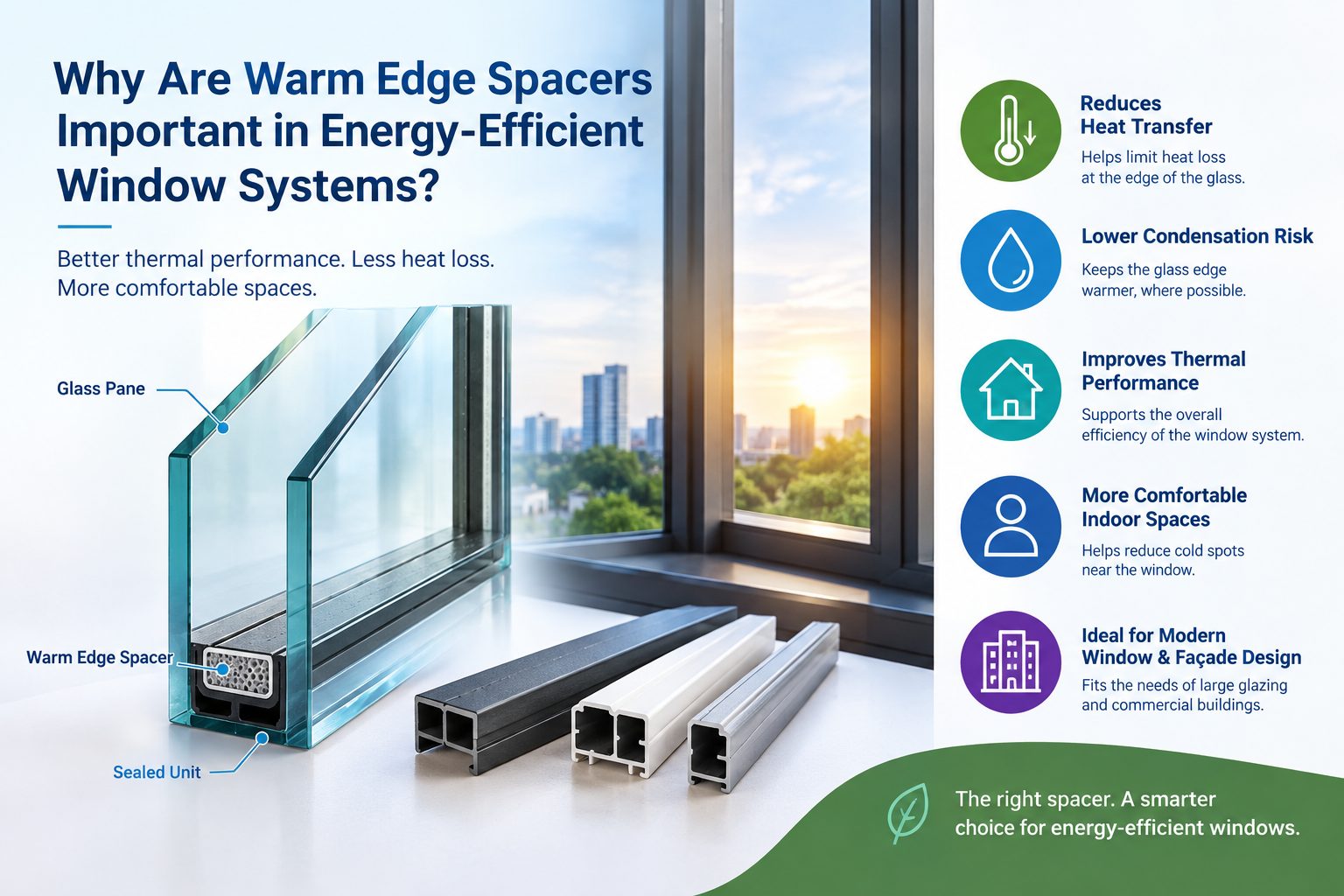
Warm edge spacers are components used around the edges of insulated glass units to help reduce heat transfer between the glass panes. They can support better window thermal performance by reducing heat loss through the edge of the glazing, depending on the spacer material and window design. For window manufacturers and façade businesses, selecting the right spacer is important when developing energy-efficient window systems. PVC warm edge spacer profiles for window systems can be considered when their design and material properties meet the requirements of the glazing system.
This article explains how warm edge spacers work, why they matter for energy-efficient windows, and what manufacturers should consider when selecting spacer profiles.
What Are Warm Edge Spacers?
Warm edge spacers are components positioned between the panes of glass in an insulated glass unit, commonly called an IGU. They help maintain the gap between the panes and form part of the sealed glazing system.
Traditional spacer designs made from highly conductive materials can allow more heat to pass through the edge of the glass unit. Warm edge spacers use materials or designs with lower thermal conductivity to help reduce this heat transfer.
Their performance depends on the spacer material, profile design, glass construction, sealants and the overall window system. A warm edge spacer is one part of a complete insulated glazing solution.
Why Are Warm Edge Spacers Important for Energy-Efficient Windows?
Warm edge spacers can influence the thermal performance of windows in several ways.
1. They Help Reduce Heat Transfer at the Glass Edge
Heat can move through the centre of a glass unit and around its edges. The edge area can become a weak point in the thermal performance of a window.
Warm edge spacer systems are designed to reduce heat transfer around this area compared with conventional, more conductive spacer designs. The amount of improvement depends on the materials and construction of the complete glazing unit.
For buildings where heating or cooling demand matters, reducing heat transfer through window edges can support the overall energy performance of the building envelope.
2. They Can Help Reduce Edge Condensation Risk
Condensation can form when a surface becomes colder than the surrounding air’s dew point. In cold conditions, the edges of a window may become colder than other areas of the glass.
By helping keep the glass edge warmer, a suitable warm edge spacer can reduce the risk of condensation around the edge of the glazing. However, condensation also depends on indoor humidity, outdoor temperature, ventilation and the overall window design.
Choosing a suitable spacer is therefore one part of managing condensation, not a complete solution on its own.
3. They Support Better Window Thermal Performance
A window’s thermal performance depends on several components, including the glass panes, gas fill, frame, seals and spacer system.
Warm edge spacers can help improve the edge-of-glass thermal performance of an insulated glass unit. This may contribute to better overall window performance when combined with suitable glazing and frame designs.
Manufacturers should assess the complete window system rather than judging its performance by the spacer alone.
4. They Can Support More Comfortable Indoor Spaces
Cold areas near windows can affect how comfortable a room feels, especially during colder weather. By helping reduce heat transfer around the glass edge, warm edge spacers may contribute to a more even indoor surface temperature.
The result depends on the building, window specifications, installation quality and local climate. A well-designed window system considers all these factors together.
5. They Are Relevant to Modern Window and Façade Design
Commercial buildings often use large glazed areas to achieve a particular appearance and provide natural light. These designs also need to consider heat transfer, condensation and energy performance.
Warm edge spacers can be part of the glazing design for suitable window and façade systems. The correct choice depends on the glass unit, frame, dimensions, environmental conditions and project specifications.
How Do PVC Warm Edge Spacer Profiles Fit into Window Systems?
PVC warm edge spacer profiles are designed for applications where a PVC-based profile meets the technical requirements of the glazing system. Their cross-section, dimensions and material formulation affect how they fit into the intended assembly.
When assessing these profiles, window manufacturers should consider the following points.
- Profile dimensions. The shape and dimensions must match the design requirements of the glazing unit.
- Material properties. Thermal performance, dimensional stability and other required properties should be checked against the intended application.
- Compatibility with the glazing system. The profile must work with the glass, sealants and other components used in the assembly.
- Production consistency. Dimensional control is important when profiles need to fit correctly across repeated production runs.
- Application requirements. The complete system must meet the relevant performance and building requirements.
Not every PVC profile is suitable for use as a warm edge spacer. Material suitability, system compatibility and any required testing should be confirmed before the profile is selected for production.
What Should Window Manufacturers Consider When Choosing Warm Edge Spacers?
Selecting the right warm edge spacer involves more than choosing a material. Manufacturers should assess the technical requirements of the complete window system.
Thermal Performance Requirements
Determine the required thermal performance of the glazing unit and check how the spacer affects the edge-of-glass and overall window performance. Where needed, use recognised test data or calculations for the proposed system.
Profile Design and Dimensions
Confirm the cross-section, wall thickness, dimensions and fitting requirements. Technical drawings can help the profile manufacturer assess whether the design is suitable for extrusion.
Material Compatibility
Check whether the spacer material is compatible with the glazing construction, sealants and expected operating conditions. Do not assume that a profile material will work with every insulated glass system.
Moisture and Condensation Considerations
Review the edge-seal design, indoor humidity conditions and expected climate. Warm edge spacers can help reduce edge condensation risk, but correct installation, sealing and ventilation also matter.
Sample Approval and Quality Checks
Before bulk production, review a sample against the agreed specifications. Check its shape, dimensions and other critical features, and confirm any testing or inspection requirements.
Production and Supply Needs
For commercial production, discuss order quantities, repeat-order requirements, quality checks and lead times with the manufacturer. Clear specifications help reduce uncertainty when moving from sample approval to bulk manufacturing.
How Do Custom Warm Edge Spacers Support Window and Façade Systems?
Different window and façade systems may require different spacer dimensions, cross-sections or material properties. A standard profile may not suit every design, particularly when the glazing assembly has specific fitting requirements.
Custom profile development allows manufacturers to assess a design against the intended application and agreed specifications. Before production, buyers should confirm the drawing, material requirements, compatibility needs and sample approval process.
For further information on design considerations, read custom warm edge spacers support window and façade systems. This related article covers factors businesses should consider when evaluating custom spacer designs for different applications.
How Does M3 Extrusion Support Custom Warm Edge Spacer Requirements?
M3 Extrusion is an Indian manufacturer of customised plastic extrusion profiles for industrial and commercial applications. The company works with B2B customers that need profiles manufactured according to their drawings, dimensions, material requirements and production specifications.
For warm edge spacer projects, buyers can share their technical drawings, intended application, required quantities and material specifications for review. Samples can be produced for assessment before bulk manufacturing, helping customers check whether the profile meets the agreed requirements.
M3 Extrusion also supports OEM manufacturing, bulk production and international supply. The suitability of a proposed profile depends on the required design and application. Buyers should confirm thermal performance, glazing compatibility and any required testing for their complete window system.
Frequently Asked Questions
1. What is the main purpose of a warm edge spacer?
A warm edge spacer maintains the gap between panes in an insulated glass unit while helping reduce heat transfer around the edge of the glazing. It also forms part of the complete sealed glazing assembly.
2. How do warm edge spacers support energy-efficient windows?
They can reduce heat transfer at the edge of an insulated glass unit. This may improve edge-of-glass thermal performance and contribute to the overall performance of the window system.
3. Can warm edge spacers help reduce condensation?
Yes, a suitable warm edge spacer can help keep the glass edge warmer and reduce the risk of condensation. Actual results depend on indoor humidity, outdoor temperature, ventilation and window construction.
4. Are PVC warm edge spacer profiles suitable for every window system?
No. Suitability depends on the profile design, material properties, glazing construction, sealants and required performance. Compatibility should be confirmed before use.
5. Can warm edge spacer profiles be customised?
Custom profiles can be developed to agreed drawings and specifications when the design and material are suitable for extrusion. The proposed profile must also meet the requirements of the intended glazing system.
6. What should manufacturers check before ordering warm edge spacer profiles in bulk?
Manufacturers should confirm the technical drawing, dimensions, material specifications, glazing compatibility, sample approval, quality checks and delivery requirements before placing a bulk order.
Summary
Warm edge spacers are important components in energy-efficient window systems because they help reduce heat transfer around the edges of insulated glass units. Depending on the complete glazing design, they can also help reduce edge condensation risk and support better window thermal performance.
Choosing the right spacer requires careful attention to material properties, profile dimensions, glazing compatibility and production quality. Custom warm edge spacer profiles may be suitable when a window system requires specific dimensions or design features.
If your business needs customised warm edge spacer PVC profiles, contact M3 Extrusion to discuss your drawings, specifications and production requirements. Confirm the proposed profile’s suitability for your glazing system before proceeding with bulk production.