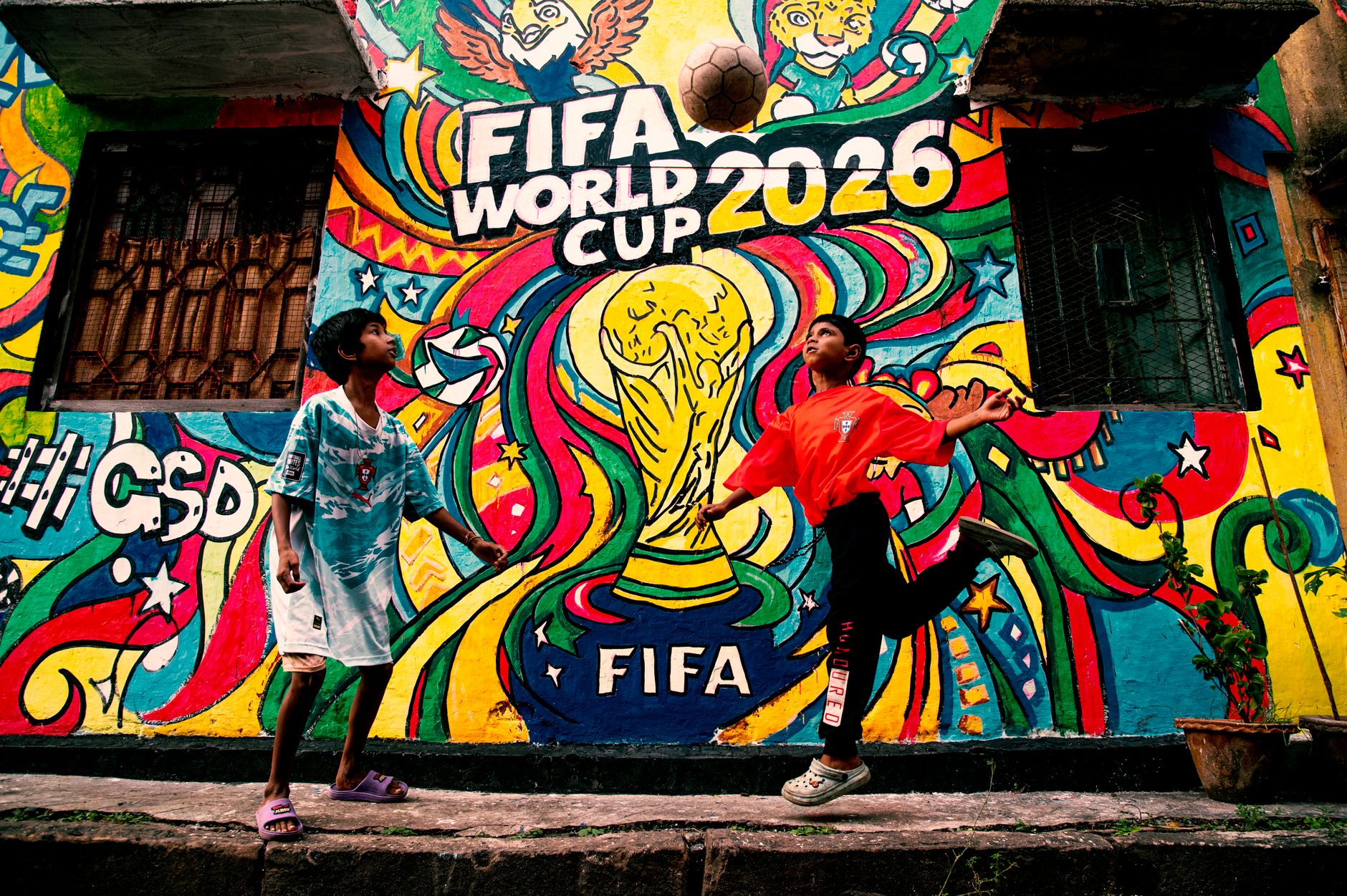
Every four years the football world stops for a month, and the 2026 edition is bigger than anything that came before it. Three countries, sixteen host cities and forty-eight national teams all packed into a summer of football across North America. If you are planning your viewing schedule, or just want to sound informed in the group chat, this guide covers how the tournament is structured, how the groups work and which fixtures deserve a spot in your calendar.
Three hosts, sixteen cities
The United States, Mexico and Canada share hosting duties, the first time three nations have staged a World Cup together. The majority of matches take place in the US, with Mexico and Canada hosting their own share of group games and early knockouts. Mexico City's Estadio Azteca, a stadium that has already staged two World Cup finals in its history, hosts the opening match, while the final is played at MetLife Stadium just outside New York.
For fans watching from India, the spread of venues means a spread of kickoff times. Matches on the US east coast tend to land in the late evening or early morning IST, while west coast fixtures push deeper into the night. Plan your sleep accordingly, because the schedule does not care about your Monday meetings.
How the group stage works
The jump from thirty-two to forty-eight teams changed the whole shape of the tournament. Here is the structure in plain terms:
- Twelve groups of four teams each, labelled A through L.
- Every team plays three group matches, one against each opponent in its group.
- The top two teams in each group qualify for the knockout stage automatically.
- The eight best third-placed teams across all groups also advance.
- That produces a round of 32, a brand new knockout round for a World Cup.
The third-place rule keeps almost everyone alive until the final group games. A team can lose its opener, scrape a draw in the second match and still sneak through with a win in the third. Expect the last round of group fixtures to be chaotic in the best possible way.
Fixtures worth circling
With over a hundred matches, nobody watches everything. The opening match in Mexico City sets the tone and is always a spectacle regardless of the football. Any group meeting between two former champions is appointment viewing, and the final group matchday in each group is played simultaneously to keep things fair, which makes for brilliant split-screen drama.
A word on the group of death. Every draw produces at least one group where three genuine contenders fight for two safe spots, and those six matches are worth prioritising over almost anything else in the first two weeks. The opposite also exists: groups with one clear heavyweight and three outsiders, where the real contest is the scrap for second and the maths of third-place qualification. Both types produce drama, just of very different kinds.
In the knockout rounds, the round of 32 throws up at least a few mismatches on paper, but World Cups have a habit of ignoring paper. The quarter-finals onward is where the tournament traditionally produces its classics, and the final on 19 July is the single biggest sporting event of the year, full stop.
Following along from India
Indian interest in the World Cup grows with every edition, and this one is no exception. Streaming platforms carry every match live, highlight packages land on social media within minutes of the final whistle, and fantasy and prediction games give casual fans a reason to watch groups they would otherwise skip. Plenty of fans also add a small wager to the matches they care about. Those who do typically want a platform with tournament coverage and local payment support, which is why searches for dafabet login in india spike whenever a major football event kicks off. If betting is part of how you enjoy the tournament, keep the stakes small and the fun front and centre.
Making the schedule work for you
A practical tip: do not try to follow all twelve groups. Pick three or four storylines and follow them properly. Maybe it is a favourite chasing the trophy, a debutant nobody rates, or a group of death where every match matters. You will enjoy the tournament far more by knowing a few teams deeply than by half-watching all of them.
It also helps to note the rest days. The group stage runs at a relentless pace with multiple matches daily, then the tournament breathes between knockout rounds. Those gaps are perfect for catching up on highlights from the groups you ignored.
The short version
Forty-eight teams arrive, twelve groups sort them, thirty-two survive into the knockouts, and one nation leaves North America with the trophy. The expanded format means more football than any previous World Cup, more late drama in the group stage and more chances for an underdog to write itself into history. Set your alarms, stock the fridge and enjoy it. The next one is four long years away.